PDF SIGNING TOOL
Signed
One PDF. One signer. Done.
Upload a PDF, add the fields you need, and share a private signing link. A simple way to get a document signed without setting up a whole system.
HUMAN-LED · BUILT WITH AI
Some tools solve problems for other people. Some make my own work easier. These are the web apps and desktop tools I’ve built with AI, one useful idea at a time.
A signature. A content calendar. A script on my Mac. Software ideas show up in the work I’m already doing.
PDF SIGNING TOOL
One PDF. One signer. Done.
Upload a PDF, add the fields you need, and share a private signing link. A simple way to get a document signed without setting up a whole system.
MY SOCIAL MEDIA SCHEDULER
My brands. One place to plan.
I built my own social media scheduler instead of paying for another platform. It keeps my brands, content, and posting schedule organized in one place.
DESKTOP APP
A teleprompter for my Mac.
I built this for myself. Now you can use it, too. Paste a script, set your speed, and press play. It works offline, with no account or subscription.
Apple silicon · macOS 14+
Version 1.0 · 420 KB ZIP · Free
Not Apple-notarized. macOS may block it or show a security warning.
Unzip, then move Easy Prompter into your Applications folder.
I had a few ideas, but I focused on problems that would still exist even as AI keeps getting better. I wanted the products to be grounded in reality and in experiences I actually had.
I tested a few smaller things to see what AI could do. Then I turned that practice toward real problems I wanted to solve. I’m not an expert. I’m still figuring out how a lot of this works. LinesFly and HuddlePops came out of those experiments.
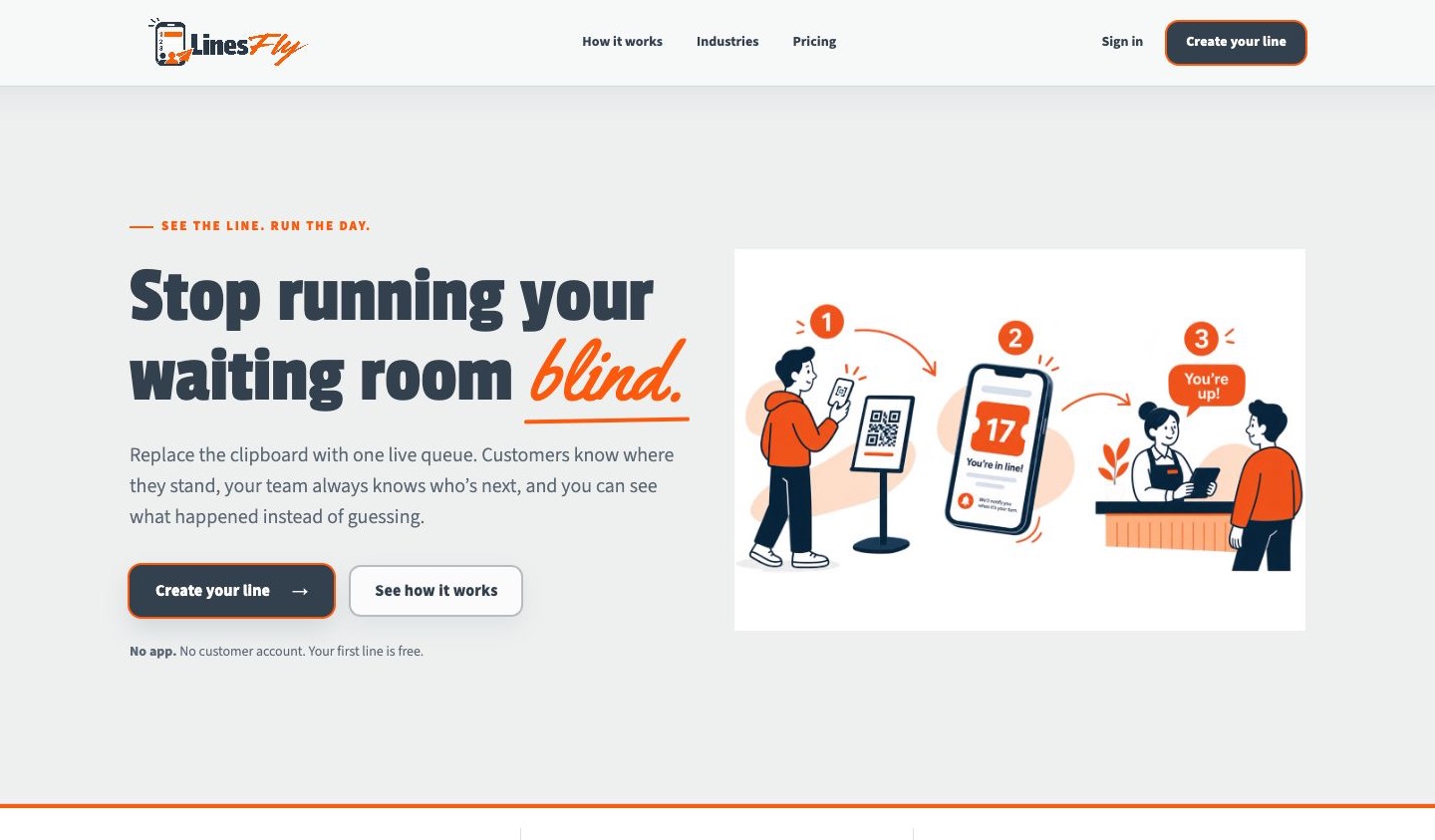
A live queue for walk-in businesses. Customers scan a QR code, join the line, see where they stand, and get called when it’s their turn. Staff get one clear view of who’s next.
LinesFly is not the only queue management product in the market. There are plenty of other systems. This is my way of solving the problem: simple for the customer, clear for the staff, and built around the phones people already carry.
THE PROBLEMA clipboard, repeated questions, crowded waiting areas, and a lot of guessing about who is next.
MY VERSIONA real-time waitlist that lets people join by QR code, see their place, and wait anywhere.
I asked ChatGPT what it could cost to recreate the current scope with a traditional product team. That estimate accounts for:
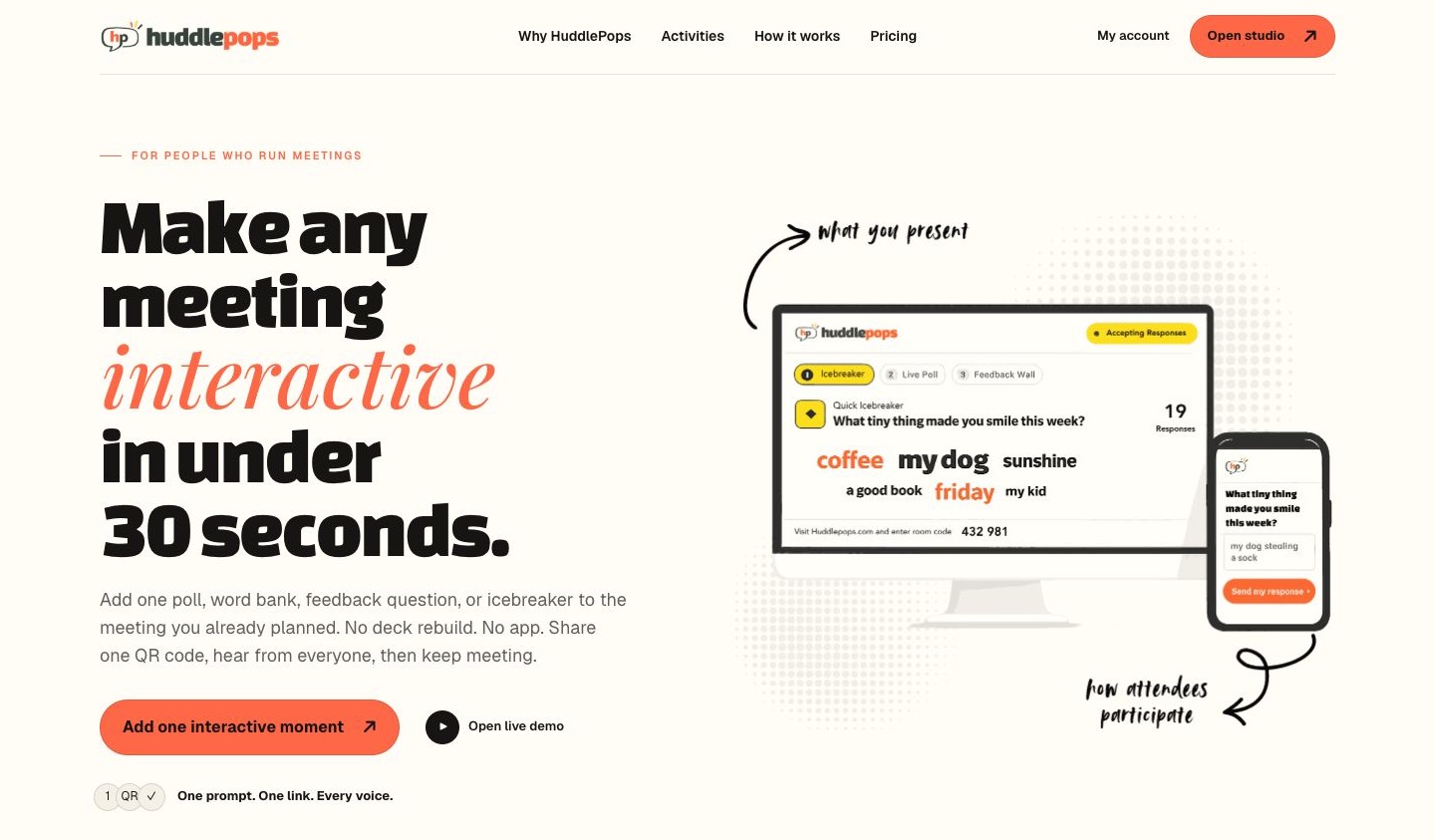
A simple way to make meetings interactive. Add a poll, word bank, feedback question, or icebreaker; share one QR code; and let everyone answer from their phone.
HuddlePops is not the only polling or meeting engagement product. There are many others. This is the one I wanted to build, shaped by years of leading teams, facilitating groups, and trying to get more voices into the room.
THE PROBLEMAsk the room a question and hear from the same two people, or nobody.
MY VERSIONOne interactive moment that lets everyone respond from a phone and gets more voices into the conversation.
I asked ChatGPT what it could cost to recreate the current scope with a traditional product team. That estimate accounts for:
Human-led. Built with AI.
You can click through and try them. These are working products, not just screenshots or ideas sitting in a notepad. I built them.Getting working software online is one thing. Maintaining it once real people use it is another.
LinesFly and HuddlePops will need attention, judgment, and care. AI can help me do more, but it does not remove the human responsibility behind the product.
Watch for bugs, keep the software reliable, protect the data, and make sure new changes do not create new problems.
Answer questions, understand where people get stuck, and decide which feedback should shape the product next.
Manage hosting costs, billing, privacy, documentation, and all the unglamorous work around the software.
Explain the value, reach the right people, learn what earns trust, and see whether either product can become a sustainable small business.
Maybe it makes $100. Maybe $1,000. Maybe it flops. I do not know yet. Building it was the first experiment. Keeping it useful is the next one.
Turn a problem you know into a free Codex master prompt. A clear first build, simple tools, and low costs.