I went for Computer Science.
I had no idea what I was looking at. I struggled. I failed. And maybe more importantly, I hated it. Coding was not for me.
this class humbled meMY STORY · FROM COMMUNITY BUILDING TO BUILDING SOFTWARE
More than 20 years later, I came back to the thing I thought was not for me. I didn’t learn how to code. The barrier between an idea and creating something real using code got a whole lot smaller. It’s practically gone.
I went to college thinking I was going to study computer science and engineering. Then I took a programming course, and it humbled me.
I had no idea what I was looking at. I struggled. I failed. And maybe more importantly, I hated it. Coding was not for me.
this class humbled meI changed direction, got a management degree, and started doing work that made more sense to me: people, teams, organizations, and solving real problems.
this was a better fitI got into nonprofit work and worked my way up to Vice President. I built teams, ran programs, managed multimillion-dollar budgets, earned my master’s, and genuinely did work that mattered to me.
I’m in a good placeI wanted to build something outside of a program or a project for work. I wanted to create something that started in my head and became real enough for other people to see.
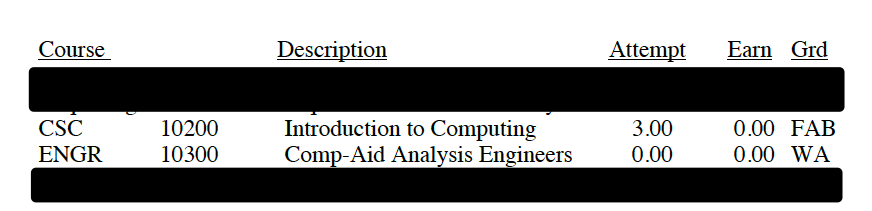
some unfinished businessI took Introduction to Computing and earned a total of zero credits. I also took Computational Aid Analysis for Engineers, which I later withdrew from.
 VIEW TRANSCRIPT FULL SIZE ↗
Can I learn how to code?
I can explain what something should do. I can test it, break it, change my mind, ask better questions, and keep going until the thing on the screen behaves like the thing in my head.
Apparently, that’s a kind of building too. Hector Cuevas
Maybe you’ve had it for years. But somewhere between the idea and actually building it, you hit the same wall I did: “I don’t know how to code.”
I can’t tell you where this ends, and I can’t give you the blueprint. I’m still drawing the map while I walk it. But I can show you where I’ve been and what happens next.
If someone who failed programming can come back more than 20 years later and build working software, I’m curious what you could build too.
Answer six simple questions. Get a free master prompt to help Codex build your first version.